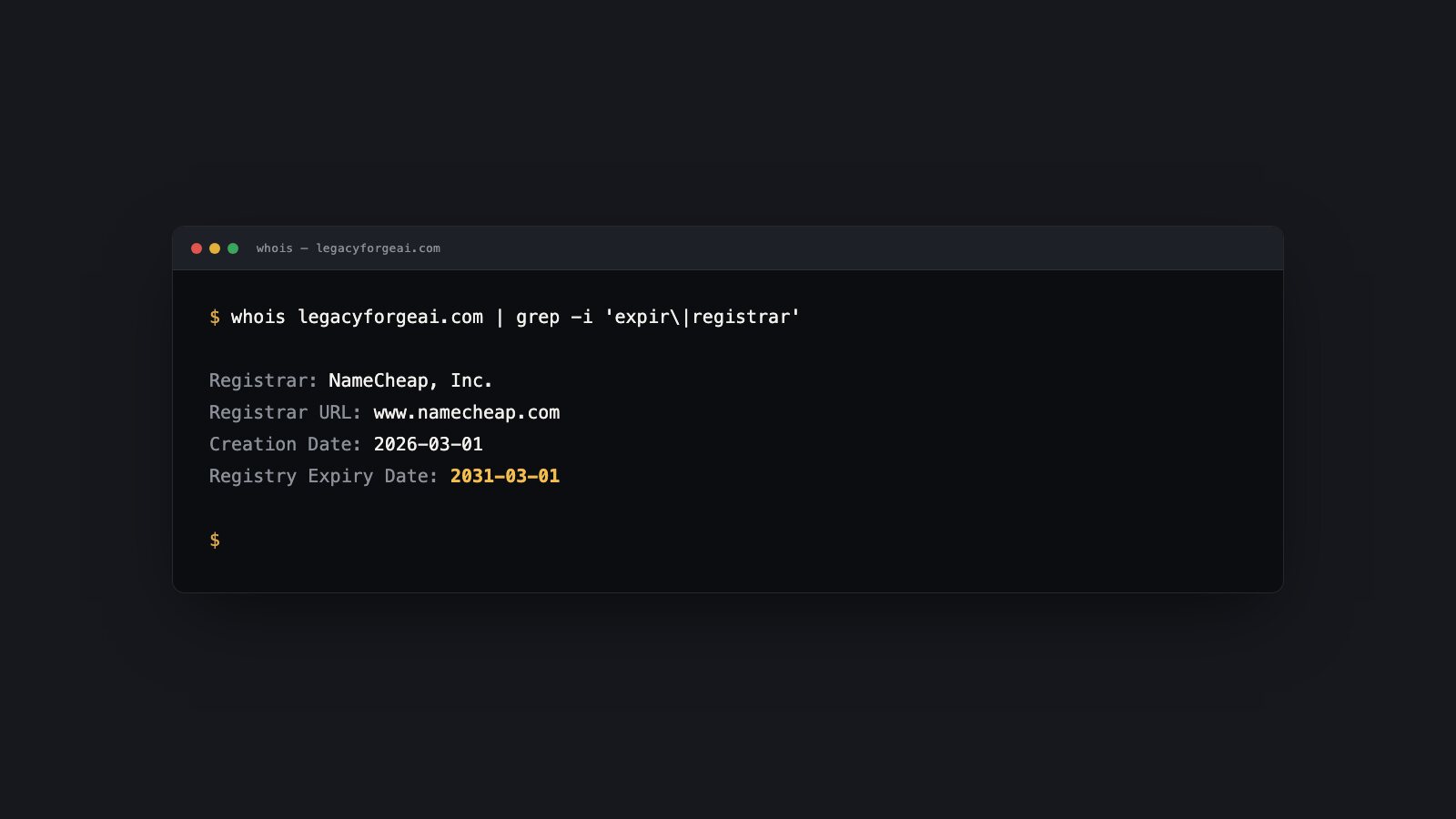
Most small business owners treat the domain name like a utility bill that just keeps working. It does, until it does not. We have watched local businesses come within days of losing their domain. The site goes dark. Email stops. The recovery path is slower and pricier than anyone expects. This is a plain warning, not a scare piece. The mechanics are simple once you see them.
How a registration lapse actually unfolds
Your domain is a timed lease. You pay a registrar (GoDaddy, Namecheap, Google Domains successor, Cloudflare, whoever holds the record) for a set term, usually one year at a time. On the expiry date the domain enters a grace period. Length varies by registrar and by the top-level domain (.com is common around 30 days, though you should not count on any single number). During grace you can still renew at the normal rate. The site and email often keep working, which is exactly why people miss the problem.
After grace comes the redemption period. Now the registrar charges a redemption fee on top of the renewal. That fee commonly runs $80 to $200 extra. The domain is no longer resolving the way it should. Visitors hit errors. Mail bounces. You are paying penalty rates just to get back what you already owned.
Miss redemption and the domain becomes available for public registration again or heads to an auction. Drop-catching services and investors watch these lists. A clean local business name can get snapped up in hours. Buying it back from a new owner, if they will sell at all, starts in the mid three figures and climbs fast. Some never sell. You end up rebranding under pressure.
None of this requires malice. It is just the published lifecycle every registrar follows. The trap is how quiet the early stages stay.
Why auto-renew fails without making noise
Almost everyone turns on auto-renew and forgets it. Auto-renew is only as good as the card and the email address on file. Cards expire. People switch banks. A fraud alert freezes the number. The registrar tries to bill, gets a decline, and sends an email to an address nobody checks anymore. Old employee address. Full inbox. Typo from years ago. The failure notice sits unread.
Some registrars send a second notice. Many do not keep trying by phone or SMS unless you configured it. The calendar date passes. Grace begins. You are busy running the shop. The first real signal is often a customer saying the website is down or an email that never arrived. By then you are already inside the expensive window.
We see this pattern with businesses that otherwise keep tight books. Domain billing is a low-dollar, low-frequency charge. It hides. The silent part is the real risk.
The two-minute check and two calendar reminders
You do not need a monitoring service to start. Open a browser.
Log into your registrar account. Confirm the expiration date, the auto-renew toggle, the payment method on file, and the account email. Update the card if it is within 90 days of expiring. Change the email to one that at least two people can access. Screenshot the confirmation page.
Then run a public WHOIS lookup. Sites like lookup.icann.org or your registrar’s own WHOIS tool show the same expiration date and registrar name. If the two sources disagree, fix the account first. WHOIS is the public record that other parties trust.
Now set two calendar reminders. One at 60 days before expiry. One at 30 days. Put them on a shared calendar if you have a partner or office manager. The reminder text can be short: “Log into registrar, verify card and email, confirm renew.” Two minutes each. That is the whole habit.
If you manage multiple domains, list them in a single note with expiry dates sorted. The work does not scale into a project. It stays small when you do it on a fixed schedule.
What we include so you do not have to remember alone
Domain monitoring sits inside every monthly plan we run at LegacyForge AI. Essentials is $149/mo. Premium is $249/mo. Enterprise starts at $399+/mo. These are introductory rates. Custom build fees ($1,499–$2,499+) are currently waived. Everything is month to month. Cancel anytime.
We track expiration dates, registrar status, and the basic DNS health that keeps the site and mail pointed correctly. When a renewal window opens we flag it early. You still own the domain and the registrar account. We just refuse to let the date slip past unnoticed. That is the practical difference between a plan and a one-off project that ends when the invoice is paid.
If you want to see the kind of sites we already keep online, look at legacyforgeai.com/work. If you want to hear how the phone side works, call (605) 315-3900. An AI receptionist answers and can take the details.
The domain expiry path is predictable. Grace, redemption fees, then open season. Auto-renew fails on expired cards and dead inboxes. A registrar login plus a WHOIS check takes two minutes. Two calendar reminders catch the rest. We have watched local businesses come within days of losing the name they built around. You do not need to be next.